| 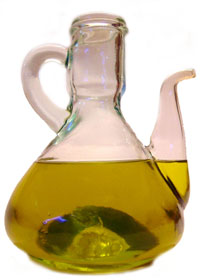 Olive oil is a vegetable oil obtained from the fruit of the Olive tree (Olea europaea L.), a traditional tree crop of the Mediterranean Basin. It is used in cooking, cosmetics, soaps and as a fuel for traditional oil lamps. Olive oil is regarded as a healthful dietary oil because of its high content of monounsaturated fat (mainly Oleic acid) and polyphenols. Grades and classification
The International Olive Oil Council (IOOC) sets standards of quality used by the major olive oil producing countries. It officially governs 95 percent of global production, and holds great influence over the rest. IOOC terminology is precise, but it can lead to confusion between the words that describe production and the words used on retail labels. Olive oil is classified by how it was produced, by its chemistry, and by its flavor. All production begins by transforming the olive fruit into olive paste. This paste is then malaxed to allow the microscopic olive droplets to concentrate. The oil is extracted by means of pressure (traditional method) or centrifugation (modern method). After extraction the remnant solid substance, called pomace, still contains a small quantity of oil.
Industrial grades
The several oils extracted from the olive fruit can be classified as:
|