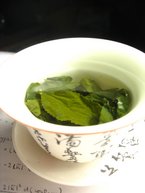
 Tea is a product made by processing the leaves or buds of the tea bush Camellia sinensis. It is commonly consumed in the form of a beverage made by steeping the processed leaves in hot water for a few minutes. Tea can refer both to the brew thus produced or to the material used to make it. The English word tea derives from the Chinese, pronounced tê in the Min Nan dialect. The flavor of the raw tea is developed by processes including oxidation, heating, drying and the addition of other herbs, spices, or fruit. Tea is a natural source of caffeine. Tea is also diuretic. also see: Tea Recipes Tea Facts
The term herbal tea usually refers to infusions of fruit or herbs containing no actual tea, for example rosehip tea or chamomile tea. Alternative terms for this are tisane or herbal infusion, which lack the word tea. This article is concerned exclusively with preparations and uses of the tea plant.
Tea is often referred to by one of its many slang names, including Cuppa (short for Cup of Tea), Bryn (short for Brynley), Chai and "brew".
About 3,000,000 tons of tea are produced worldwide annually. Chai: A beverage made from spiced black tea, honey, and milk. Chai simply translates to tea. The words Chai and Tea origins from ancient China ('Te' and 'Cha') and is used throughout the world in slightly different variations. The word Chai is, however, in some European countries interpreted as Masala Chai which means spicy tea (in Indian). |